A few months later, in September, I was back in the same space for Parramatta Zine Fair, this time as a stallholder. The room was buzzing with zines, chatter, and many familiar faces. I spoke to Aph for maybe two seconds. Throughout the day she was busy coordinating tables, checking in with stallholders, taking photos of everyone, and didn't seem to have a moment's break.
When I returned to ACE in March 2026, it was to interview Aph. Since attending that first workshop, I had made my first minicomic, begun building ZineMap, and started speaking with people who organise and maintain zine spaces about the work involved in sustaining them. I wanted to ask Aph about the history of School of Zines, the realities of running a local zine fair, and what it means to sustain an in-person zine community after stepping away from major social media platforms.
Interview conducted at Arts & Cultural Exchange (ACE), March 24, 2026
"You think you're the only person going through something, but once you put it on paper and you share it, and someone else reads it or sees it, all of a sudden they don't feel alone anymore. [...] I think that's why I love zines so much."
CJ: Before we get into School of Zines, I'd love to hear about your own background. How did you find your way into zines?
Aph: I started in comics. I was doing this project called Think Less Drow More, where I was just drawing every day instead of overthinking. As a natural extension of that, I created this character called Saiko, because she is psycho, so it was Saiko Comics. I was doing comics about daily life, stuff that was frustrating me, until I had a collection. I was working as a printer at the time, so I printed it at work, in A4, so it was this big, printed comic.
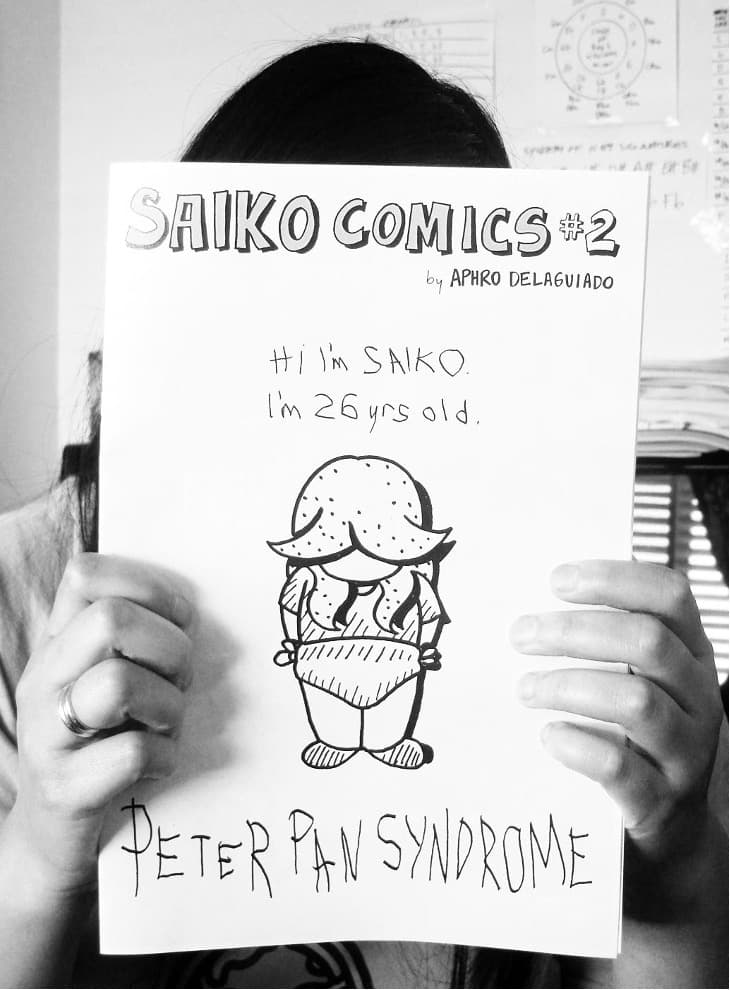
Aph: I was not planning on sharing it or selling it, because it was about depression and anxiety, things that at the time were embarrassing. But I was surprised when people, even my own siblings, would say, "Thanks for sharing this, because I have those thoughts too. I think about myself that way." Or they would connect with an imagery because it was very meaningful to them. So that's what really got me hooked into self-publishing: just that connection, and being able to process something in a creative way. You think you're the only person going through something, but once you put it on paper and you share it, and someone else reads it or sees it, all of a sudden they don't feel alone anymore, because you've kind of represented their own experiences too. I think that's why I love zines so much.
Aph: And because of that comic, I found Sticky Institute in Melbourne. This was 2011. They had this little shop in Degraves Street Subway, literally underground. It wasn't quite a bookshop; it had all these interesting publications. And I found: these are zines, and there's a whole culture behind it. It was open submission. People can submit, people can go there and make zines. They accepted my zine. They stocked it. I got paid 38 dollars for like 5 copies. And the ones that didn't get sold were put into a free exchange. I loved all of that. I was like, I'm hooked, I'm in!
CJ: Sticky was probably also the first shop I saw that's exclusively dedicated to zines. There's something very legitimising about it.
Aph: Totally. Shout out to Sticky Institute, to Small Zine Volcano, to Luke Sinclair. When I started Wolfbound Books, which was open submission for self-published books and zines, Luke actually interviewed me in its early days. I had this fangirl moment, like, oh my god, you're interviewing me!
CJ: I think when I came in for the School of Zines workshop, I saw that you had his zines, the You zines, on the shelf.
Aph: Yes, when I had a distro, I was distributing them. I love the full-circle moments.
"School of Zines is really more of a school of thought. It's all about self-validation, empowering creativity, not needing permission to express yourself, having full creative control. That's what we're trying to practice."
CJ: So how did you go from zine maker to running workshops? How did School of Zines come about?
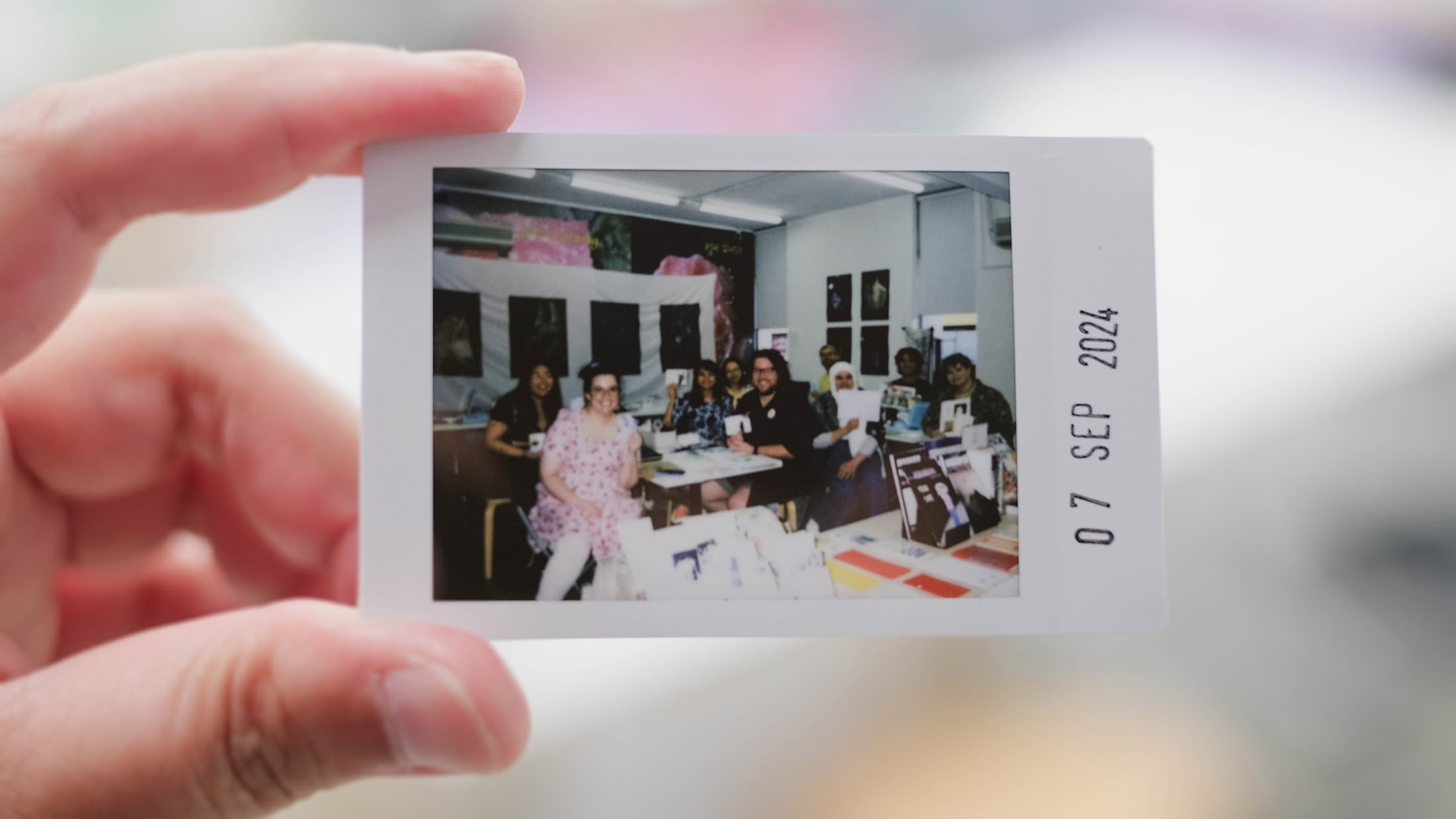
Aph: School of Zines is actually a by-product of Wolfbound Books (now archived). We started the distro around March 2024, began in Zetland, and then moved to the Arts & Cultural Exchange (ACE) here in Parramatta in August 2024. We were looking for a way to bring people in on our open days, so we thought: why not run zine workshops in the space? Our first workshop was September 7, 2024. We were so scared that no one was going to show up, but seven people came. And for me, that's still the most special workshop ever, because that kind of created the template for everything that came after. And Wolfbound Books is no more after our Big Tech boycott, but School of Zines lives on.
CJ: How would you describe what School of Zines is now, for someone coming across it for the first time?
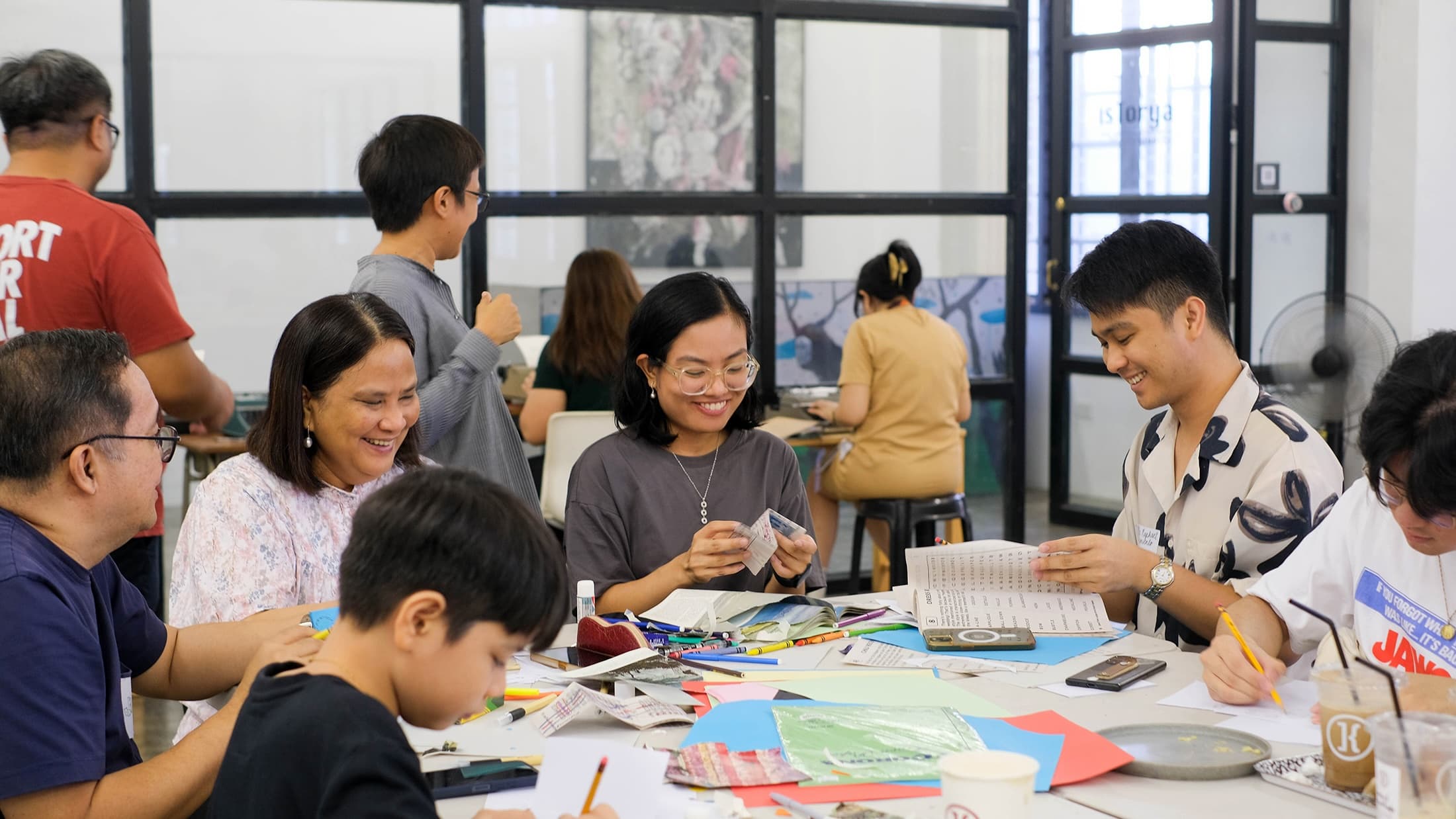
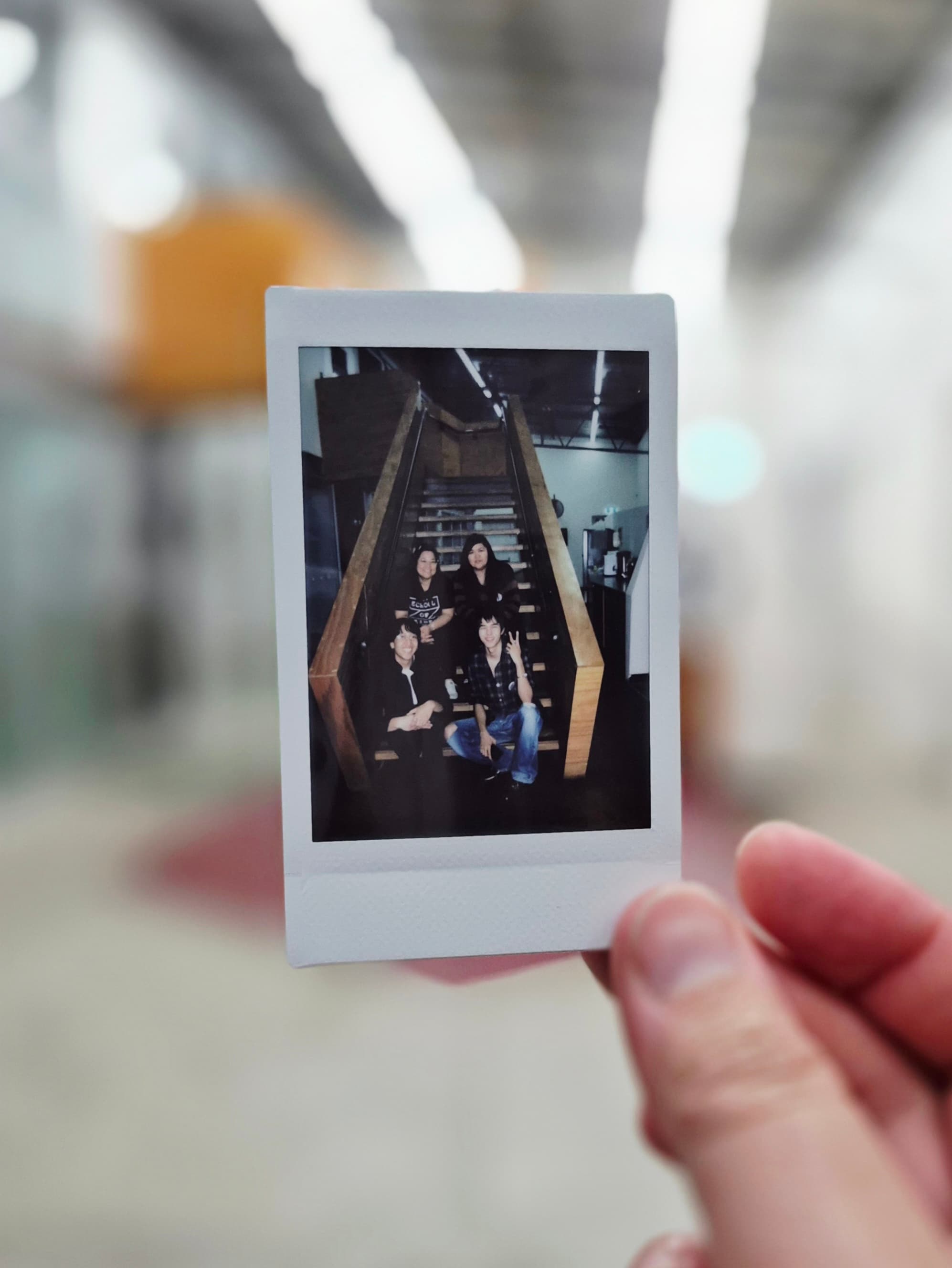
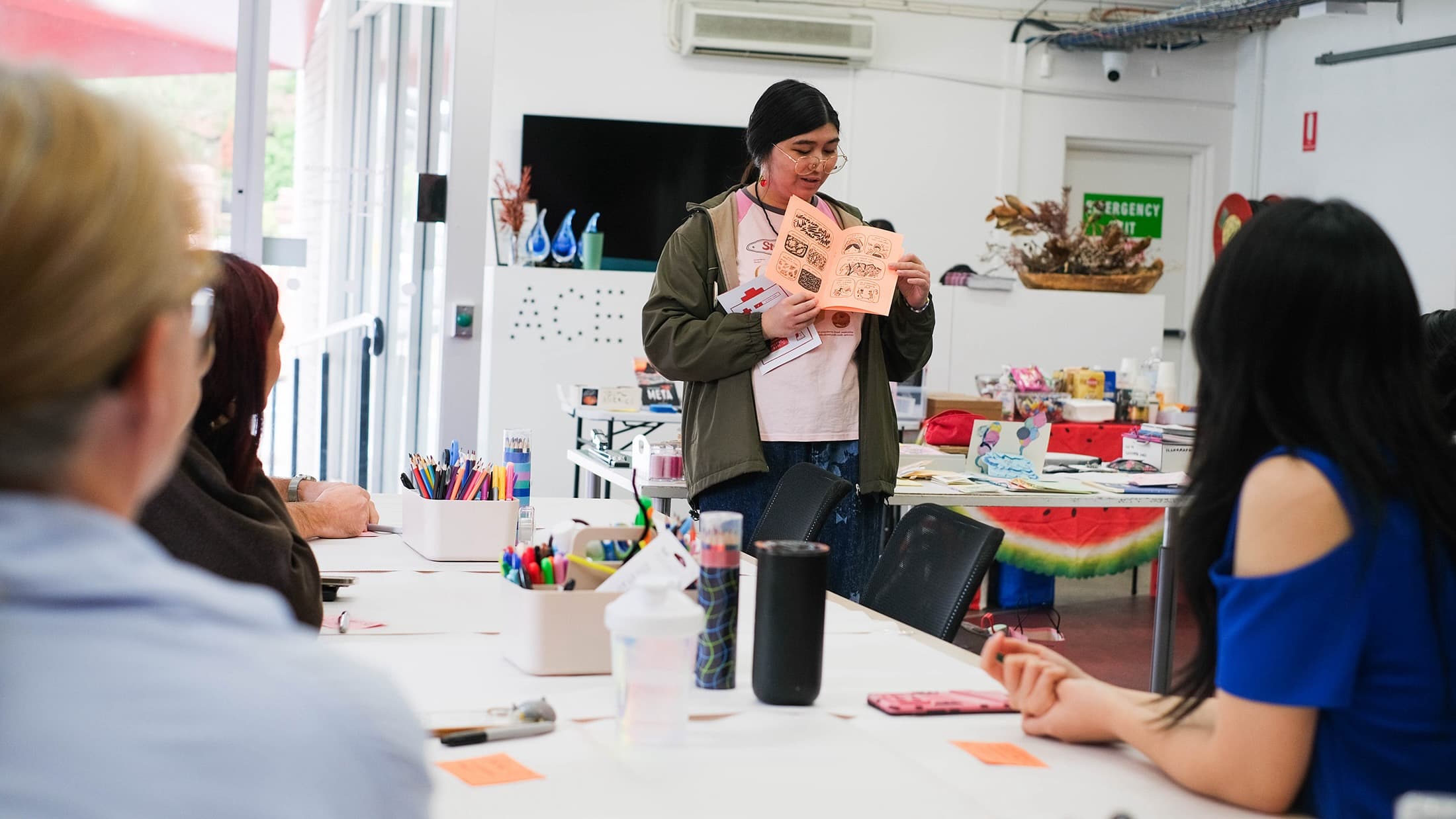
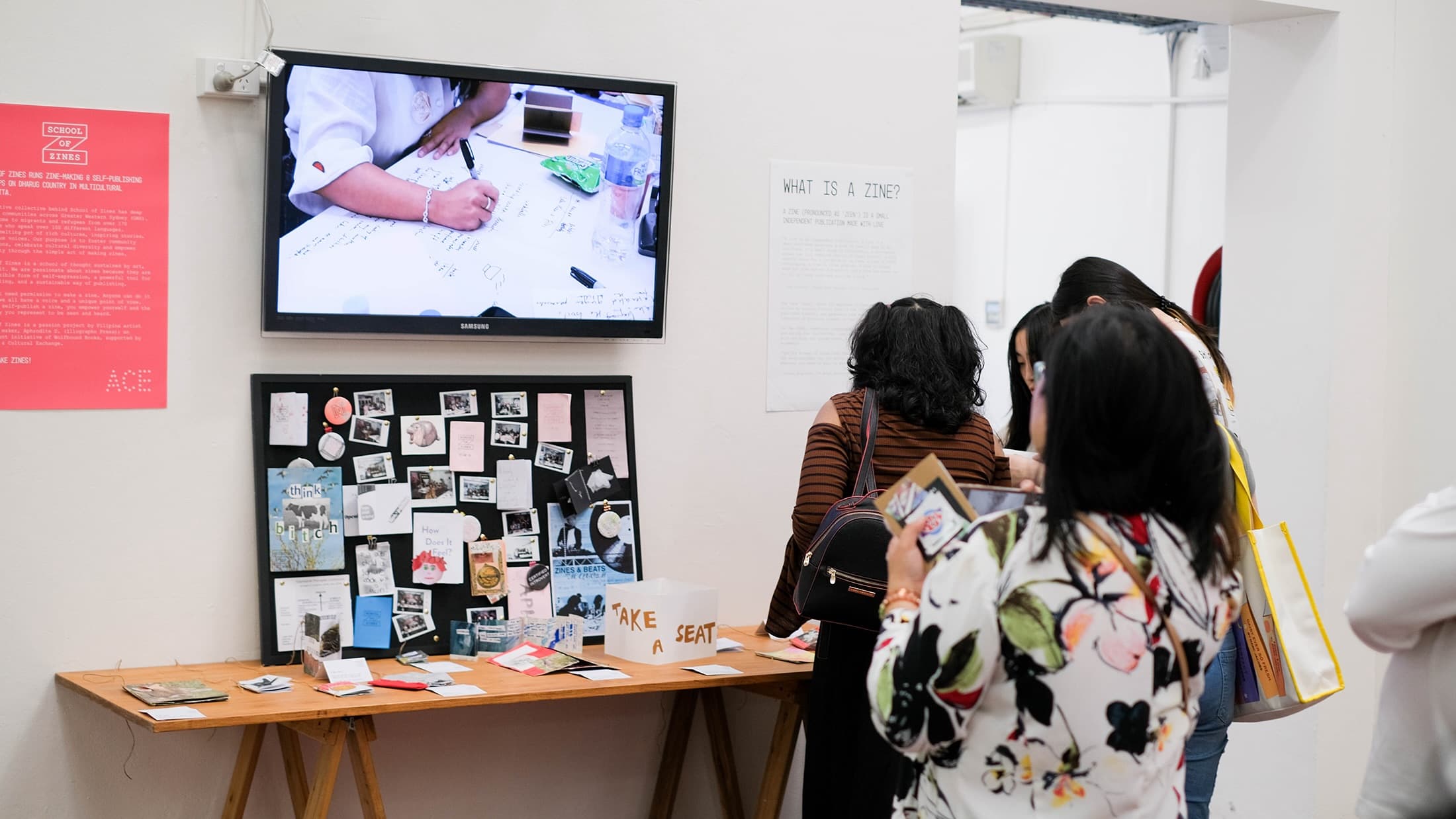
Aph: School of Zines is a collective of Western Sydney-based creatives. We run zine-making and self-publishing workshops here at ACE in Parramatta, but we also collaborate with Western Sydney University and other organisations that want to co-run workshops. We've even run it in the Philippines, with a bookstore called Istorya Studios. The core team is made up of Filipino creatives: myself, Maricris – my partner, Malcolm, and Lance. Since Lance has gone overseas, we've added a new member in February: Chantelle Maglalang, who facilitated the February workshop. She's also Filipina and fits right into the family. All the facilitators we work with are also part of the extended collective. School of Zines also hosts the Parramatta Zine Fair. And even though we have a physical space and run in-person events, School of Zines is really more of a school of thought. It's all about self-validation, empowering creativity, not needing permission to express yourself, having full creative control. That's what we're trying to practice.
CJ: What does it take to put one of the workshops together?
Aph: We're self-funded, except for the venue – because I work at ACE, they've kindly donated the foyer for three hours every month. Everything else is volunteer work. But what it really takes is community. There's no workshop without participants. You need connection to the local community, young people, people in the art scene. You need a host, a venue, and most importantly, a safe and inclusive space, because a lot of the people who come here have migrant backgrounds, refugee backgrounds, are queer or disadvantaged. The space needs to be accessible. And you need a team. I can't do it on my own. I do bring in a lot of the design and creative experience, but to run a workshop you need people that are caring and can engage; Maricris, my partner, is not a zine maker per se, but she takes care of food and snacks and makes sure no detail is forgotten. Lance has contributed a lot of technical and craft skills, like operating a sewing machine. And you need facilitators that are willing to teach workshops. We've been lucky that there are a lot of zine makers willing to share their time and skills.
"For me, as the founder, the measure of success [...] is when I no longer need to facilitate a workshop. Because when I can give that space to someone else to share their art and their love of zines, that’s how I know the zine community is thriving."
CJ: How did the team come together?
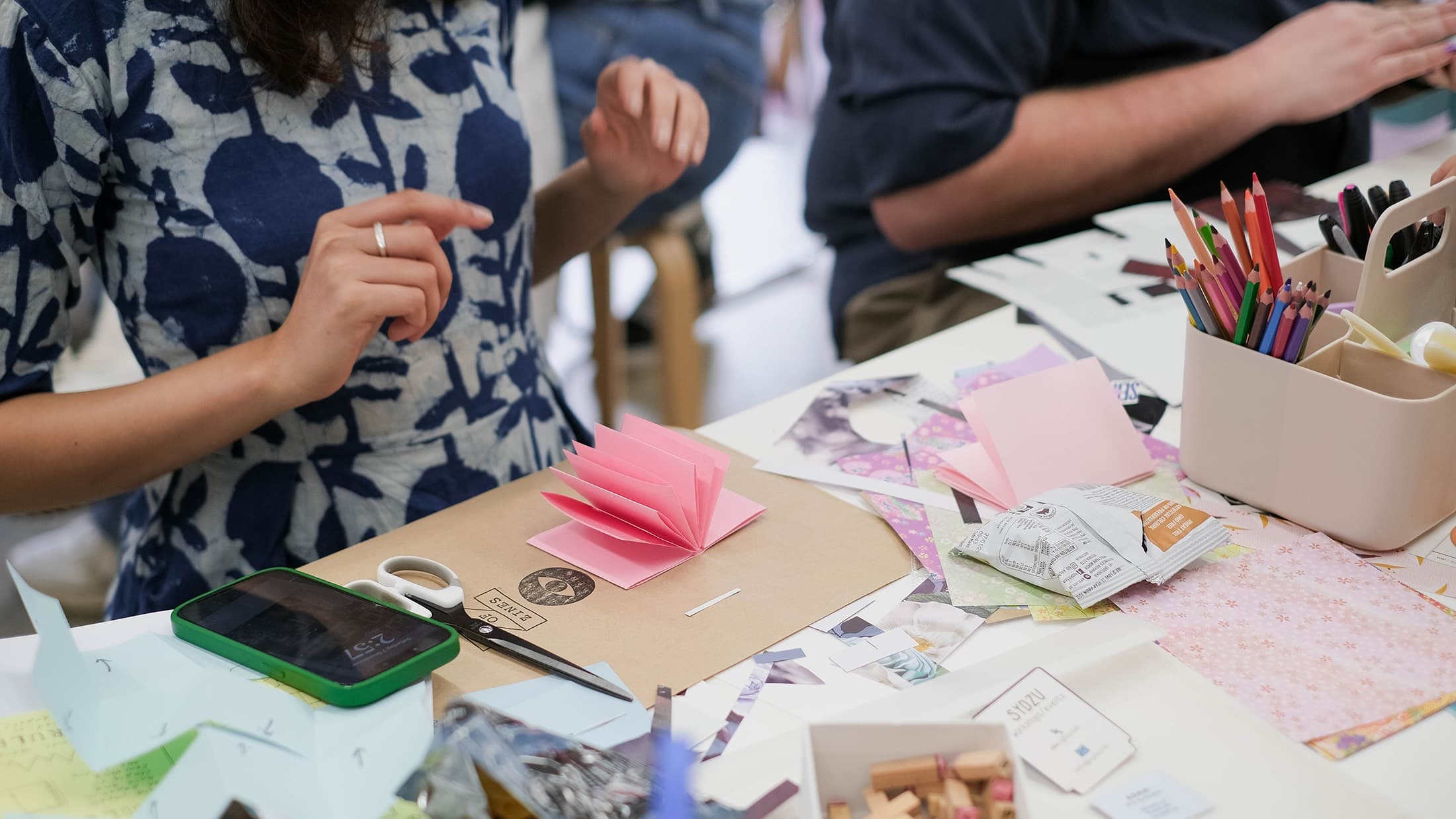
Aph: Very organically. I have a video from very early on of just myself, Maricris, Malcolm, and Lance at home doing an impromptu zine workshop at the dining table. We were just grabbing old magazines and old books and making zines with whatever we had. At the time, I was the only zine maker in the household, but being able to share that experience with them, and seeing them have that feeling of, "Oh, I made this thing," was such a good vibe. And we were like, yeah, this is it – this is what we should do. That was around August 2024, and then we ran the first workshop in September. It was based on that same idea: we'll put some stuff out, we'll hang out, we'll have food, we'll make it chill. Just friends making zines together.
CJ: And that's still the spirit of the workshops?
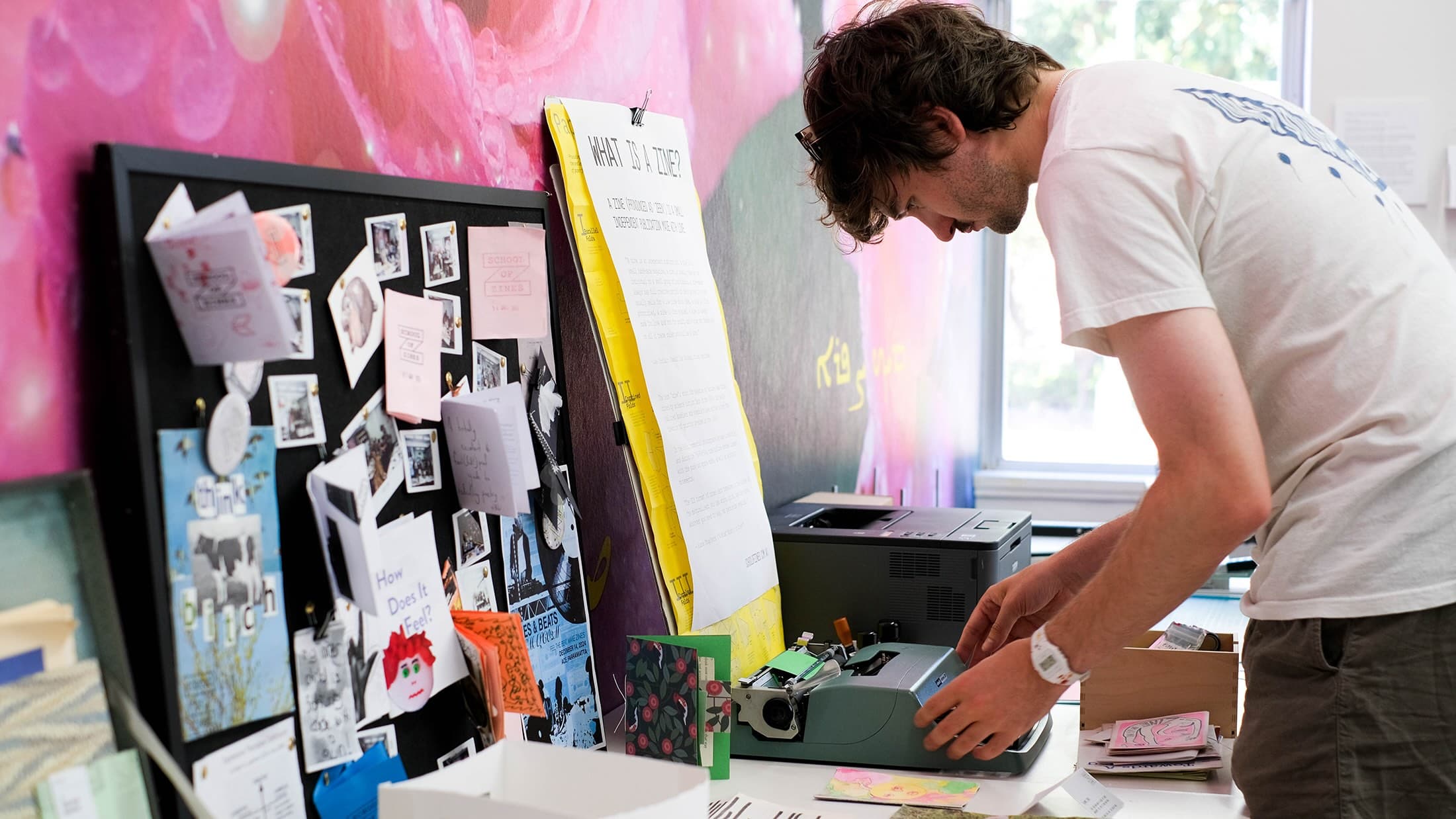
Aph: Yeah. We wanted to keep it as close to that first moment as possible. We don't even really do tickets. It's more like: sign up, and if you come, you come. If you don't, there's no pressure. The space is open, and people can feel at home. You've been to one, so you know. The facilitator shares their experience, we provide what people need: all the materials, some food, some music, and then we just create together and see what happens.
CJ: There's also a part at the end of the workshop that I really liked, where everyone shares what they made, and then they get a little prize for sharing, like a zine by the facilitator. I thought it was a very sweet touch.
Aph: Yeah. Sometimes we give prizes when we sense a bit of hesitation. But it has shifted a lot. People are so excited now to share.
CJ: So we were a very quiet group and needed a bit of extra motivation.
Aph: Yeah (laughs), every group is different. There are some workshops where everyone can't wait to get up and talk about their work, and others need a bit more encouragement. And it also depends on who's facilitating, because every facilitator brings a different experience or skill set. They might be more into music, photography, illustration, or poetry, so each workshop reshapes itself a little depending on who's running it. Each one is different, and that's amazing.
CJ: How do you decide who to invite as guest facilitators? I've noticed a lot of them are alumni who did a workshop and came back to teach.
Aph: I like things being organic. I don't like transactions. And I always go back to the ethos: we do this for love, not for profit or fame. So I try to work with people who share that ethos. We do have a call-out on our website if you're interested in facilitating. But also, because I'm an active member of the zine community, I table at zine fairs, I go to other events, and I have a lot of friends who are zine makers. And because they're really my friends, I'll just say: do you want to hang out in April? Do you want to run the workshop? Because that's three hours where you get to hang out with your friend and have them showcase their work with all these amazing people. You trust that they'll do a good job. And you're happy for them because other people are going to appreciate their work.
CJ: So it's all reciprocal.
Aph: Yeah, it's all reciprocal, not about money. But we do pay: all of the workshop fees get paid to the facilitator. I respect people's rates, of course, but I'm looking for people whose first question is "who am I going to work with?" rather than, you know, "how much will I get paid?" I work with vibes, really. That's how I choose.
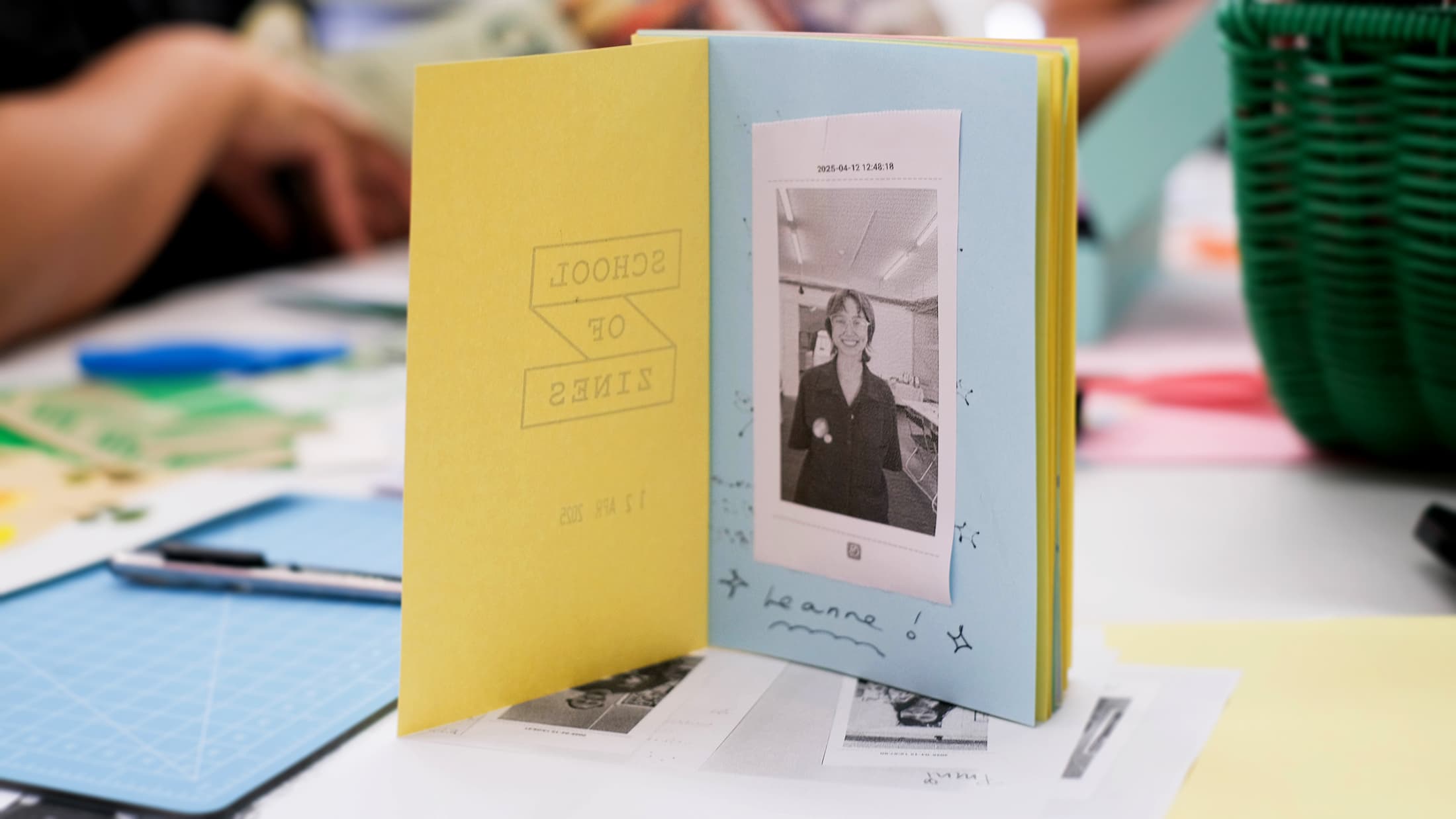
Aph: Like you said, we've had a number of School of Zines alumni who have become amazing zine makers themselves and returned as paid facilitators: Lance, Malcolm, Chantelle, Reese, Michi, Satya, Leanne, Lorna, and I'm sure there'll be many more. For me, as the founder, the measure of success is never going to be money; it's when I no longer need to facilitate a workshop. Because when I can give that space to someone else to share their art and their love of zines, that's how I know the zine community is thriving, and that we've made an impact.
CJ: How does being in Greater Western Sydney shape the project?
Aph: At the beginning, we were in Zetland, at Joynton Avenue Creative Centre, where the Rizzeria was based, but the location was tricky. It was near Green Square, close to the airport. It was a nice building, but it didn't feel like our community. But as soon as we moved here, everything just felt right. We grew up in Western Sydney, Blacktown area, and we live in Richmond now, so we felt at home. And the Arts and Cultural Exchange is such an institution here. It became accessible all of a sudden: people know how to get here, on the light rail or the bus, and some people just live around the area. So that's the logistic importance.
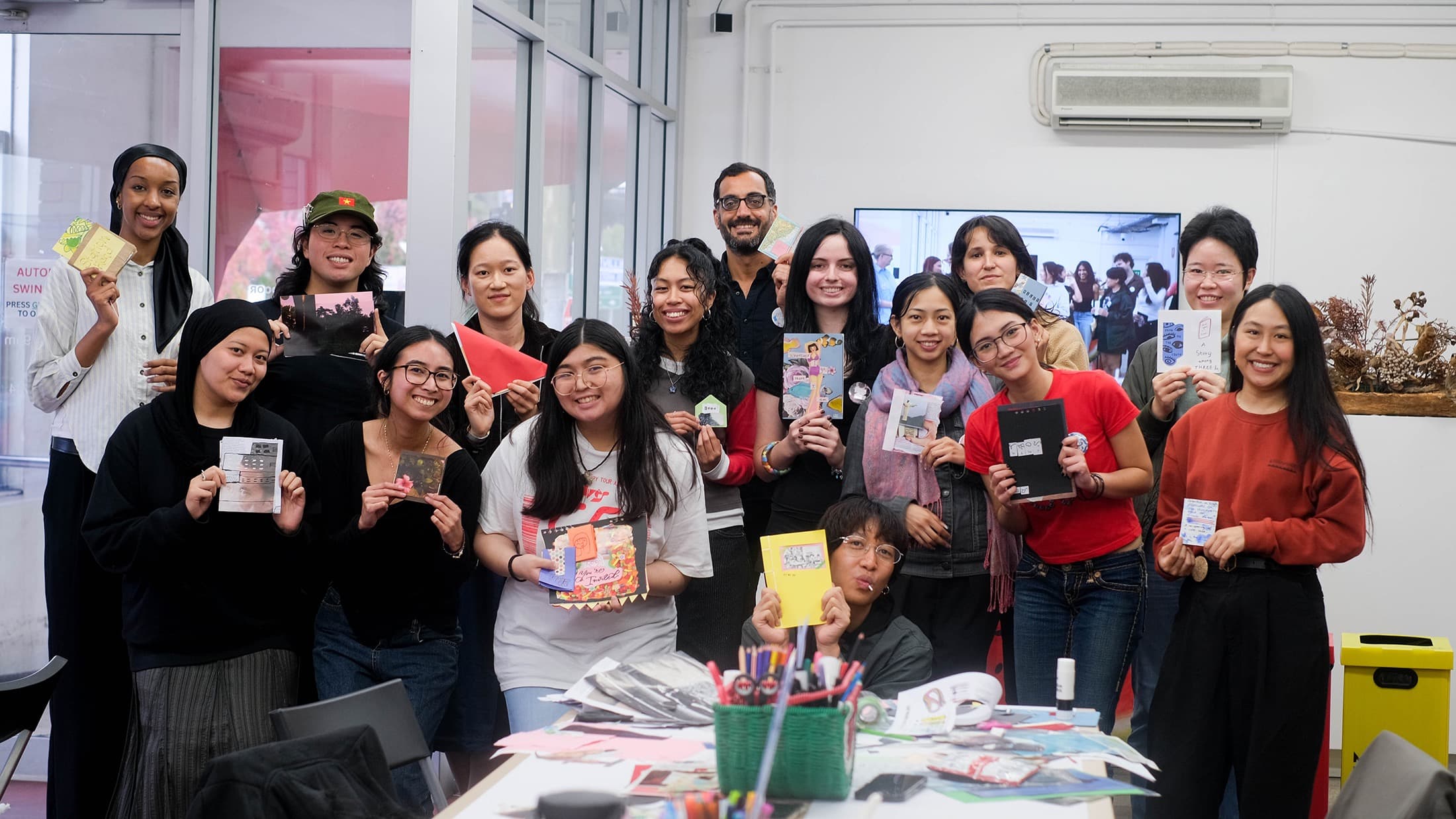
Aph: But zine-making is also all about storytelling and creative expression. And because of this DIY nature, it really empowers those who are at a disadvantage or underrepresented. Greater Western Sydney is home to migrants and refugees from over 170 countries who speak more than 100 different languages. It's a melting pot of cultures, stories, and unique voices. That's why in our workshop registration, I ask people: do you speak any language other than English? Because that's also part of what makes our zines unique. We've had workshops where we explored languages, where people get to have that platform and that pride to say: this is our culture, or this is how we say this thing in our language, or this is a poem inspired by a poet from my country. I think that's the significance of being in Western Sydney.
CJ: Does that also shape the kind of community that has formed around School of Zines?
Aph: Yeah. The community that we've gathered is very diverse and inclusive – people from Western Sydney, people from different cultural backgrounds, all ages, genders, and religions. But there's also a shared set of values, and because of that, the community itself helps create the safety and the welcoming feeling that people experience when they join. Diversity, safety and inclusion are very important to us because of who we are. We're living in chaotic times, both online and offline, so it's really important to create third spaces and communities where people can come and feel safe to be who they are. And, thankfully, that's the kind of community that is growing around us, and we hope that it stays that way.
"That's the beauty of the zine community: It's so accessible. You can be a first-time zine maker, and the following year you might have this amazing collection that you're sharing with the world and inspiring others. "
CJ: Do you see the Parramatta Zine Fair as an extension of the workshop series, or something different?
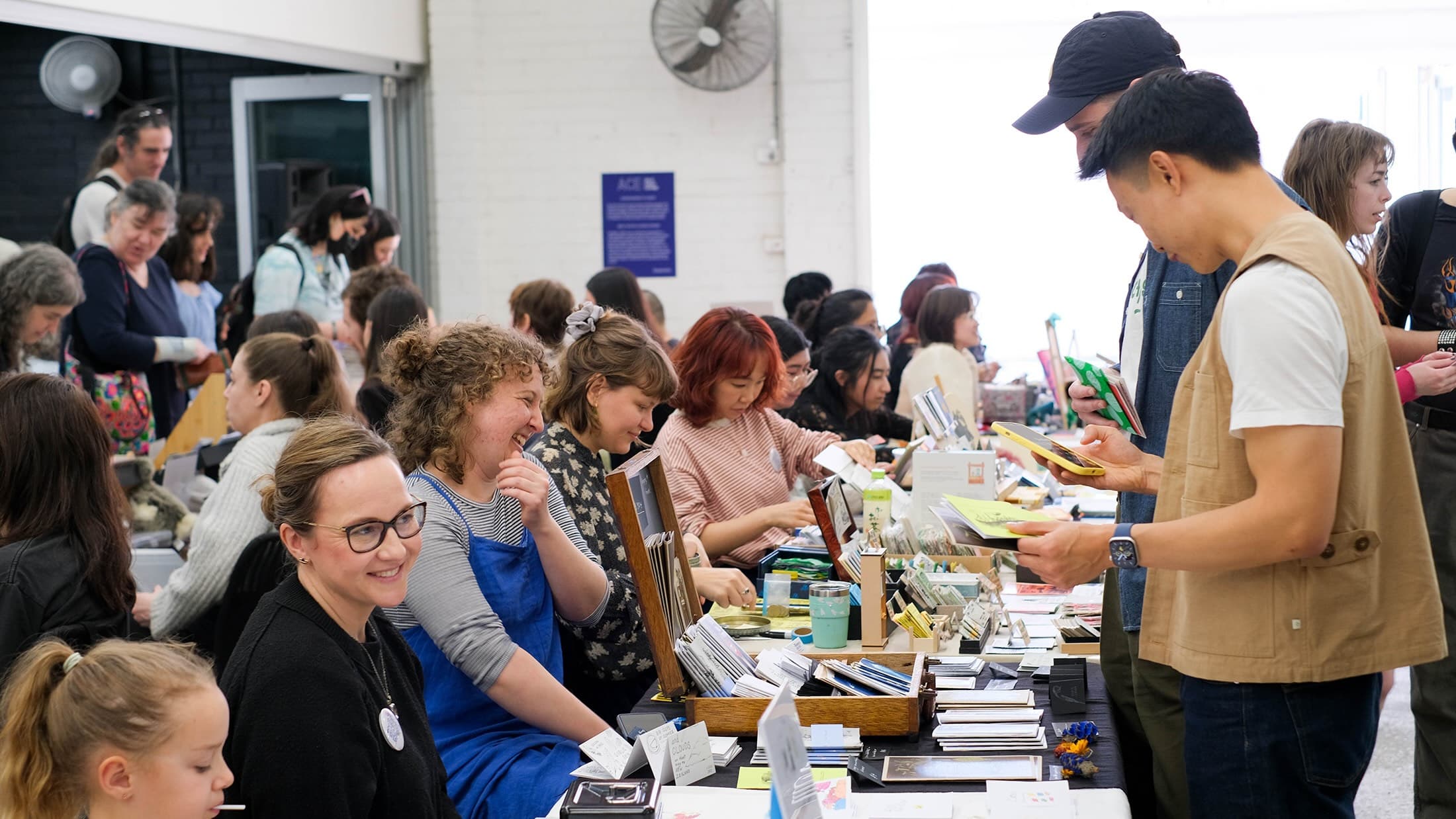
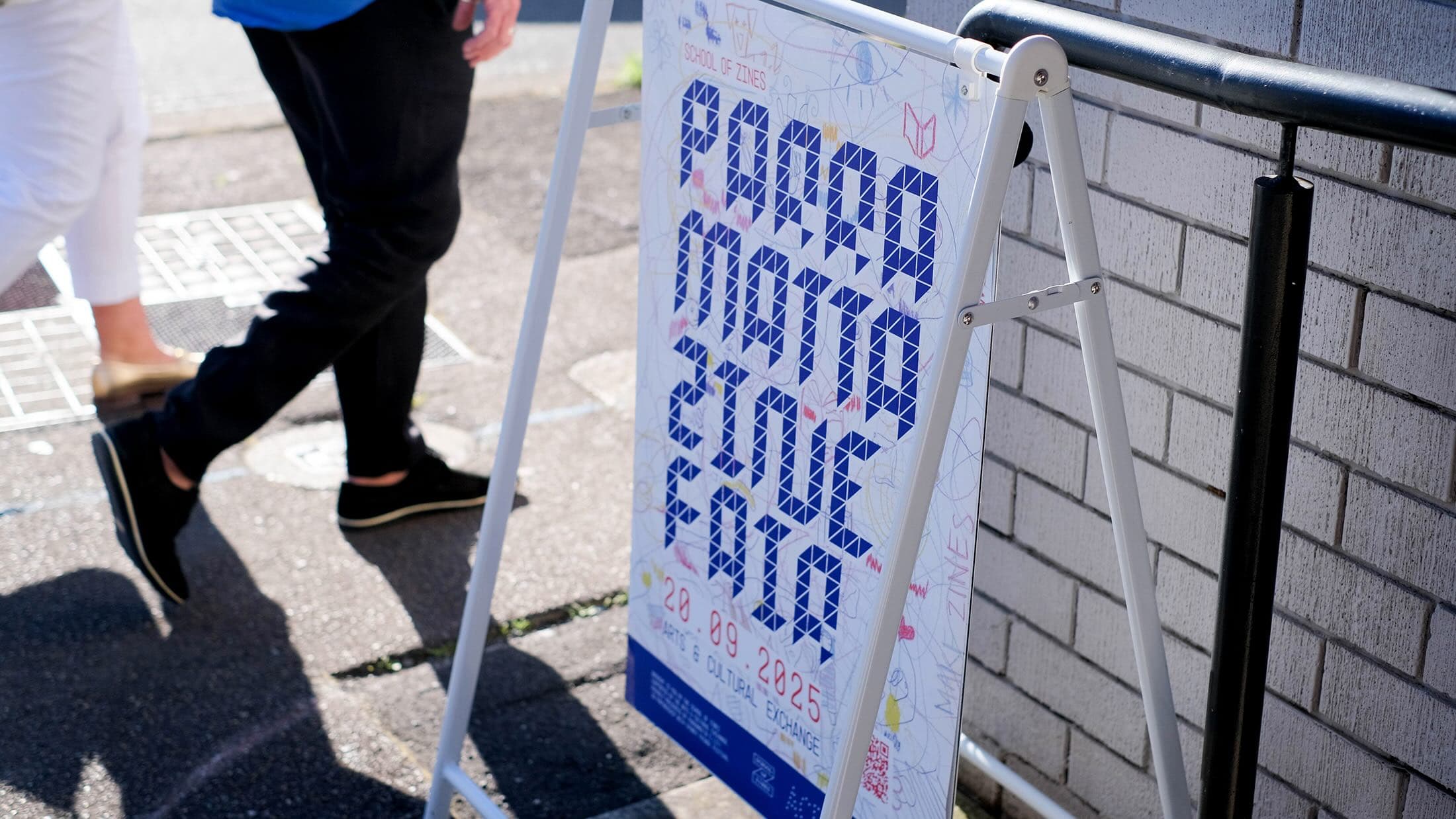
Aph: It's both. Parramatta Zine Fair is its own thing, but it's also very much connected to School of Zines. We named it Parramatta Zine Fair partly because we run it in partnership with ACE, so Parramatta needed to be in the name. The first Parramatta Zine Fair was in September 2025, which was a year from our first workshop, and instead of doing another workshop, we thought: why not celebrate our birthday with a zine fair? We were inviting the same community and zine friends anyway, and it felt like a beautiful way to bring everyone together. It also created a real tabling experience for workshop participants. In a way, that's one of the goals: you start making zines, you gain more experience, and eventually you can table. And that happened! We had some alumni tabling for the first time. And you tabled as well.
CJ: I did!
Aph: And that's the beauty of the zine community: it's so accessible. You can be a first-time zine maker, and the following year you might have this amazing collection that you're sharing with the world and inspiring others. So yes, it is an extension of School of Zines in the sense that it supports alumni and workshop participants, and it creates a platform for zine makers to connect. But it's also bigger than us. It's a celebration of art, books, and zines made in Western Sydney. There are so many organizations, collectives, independent artists, indie publishers, and small presses in Western Sydney that deserve to be highlighted. Parramatta Zine Fair creates a platform for those creatives to shine. We're not the only ones doing this work, and the fair is a way for all of us to come together.
CJ: Could you name a few?
Aph: Yeah, there was Mtns Zine Club, people from the Rizzeria, Bankstown Poetry Slam also had a presence through Bilal Hafda, who tabled with his small press, Guest House Publishing. And of course there was the ACE community too. For the first Parramatta Zine Fair, we had over 500 visitors, including people from Diversity Arts, which has an office upstairs, as well as Parramatta Artists Studios, local schools, and Western Sydney University. I'm sure there were others as well. That's what makes you so proud, seeing all these different Western Sydney communities coming together.
"There's almost nothing in zines you can do alone anyway. It has to be community. Once the community is involved, they've got your back. They'll support you and show up for you."
CJ: And what kind of work goes into organising something like that?
Aph: A lot of hard work. Sleepless nights, anxiety, blood, sweat, and tears. Kudos to everyone who has ever organised a zine fair. Especially because we're self-funded, we shoulder most of the expenses up front, with the exception of the venue. That partnership with ACE Parramatta is really important, and I want to thank them for letting us use the space for the day, because that allows us to keep the stallholder fee accessible. We still need to hire extra tables, which is the only reason we have any table fee at all.
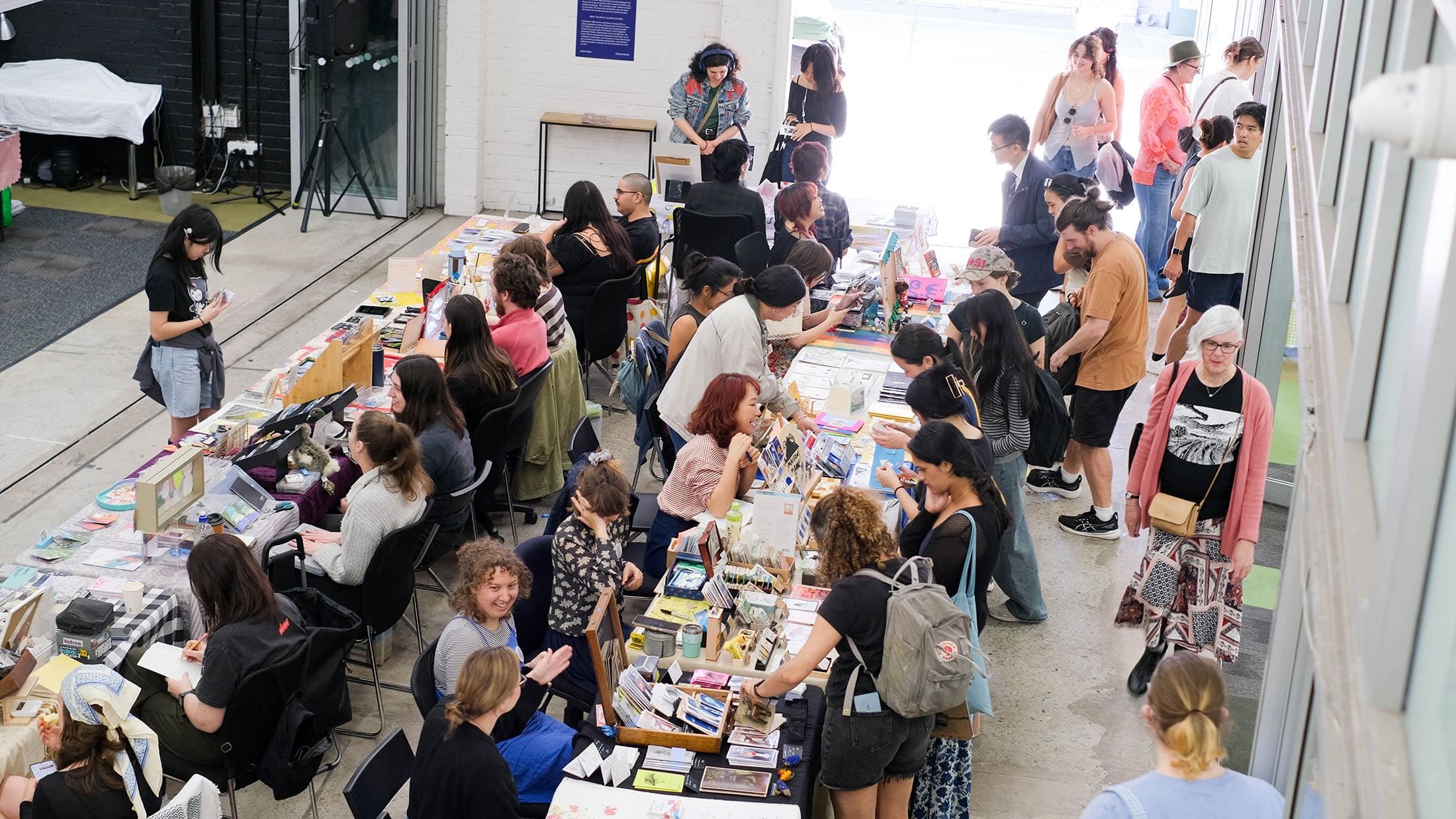
Aph: Preparations start around July: comms, promotion, the call-out. Luckily, we do all our creative design and marketing in-house, so we don't need to spend money on that, but it takes a lot of time. This year, we also have the extra challenge of spreading the word without social media, so we'll be relying on word of mouth, traditional media, and telling people in person. The work ramps up around August and September, once we have the stallholder lineup. Then it's event planning: the floor plan, table coordination, signage, promotion, all the logistics. Last year we had 80 stallholders. We'll see what we can accommodate this year, and whether we need to adjust. And then on the day itself, you don't rest… from the night before, to early in the morning, all the way through to pack-up. Then there are all the follow-up comms afterwards. It's a proper event. But it's all worth it. I guess that's the beauty of the zine community, that we all do it for each other. You get the honour of attending someone's zine fair, and you pay it forward by organising one, making sure there's a good turnout, and that a lot of people see their work. That's the motivation.
CJ: Promo-wise, I remember seeing flyers on the street near Redfern and Broadway.
Aph: Yeah, we had some ninja posters! I don't know where they came from. When we emailed the successful stallholders, we included a promo pack with posters and social media assets, and apparently people started printing them and putting them up everywhere. I never knew who most of them were, but I'm very grateful to everyone who helped spread the word. There are a few I do know, but I'll let them stay anonymous.
CJ: What does visibility or staying connected look like, now that School of Zines has exited social media?
Aph: It's only been about three months, so it's early days, but I'm optimistic. It helps that we have a solid offline community. And because of the nature of zines and because we're not for-profit, you work with friends, family, friends of friends. These are people that are already in your life, so information gets spread out. And it helps to have connections with other organisations: like ACE, Mtns Zine Club, The Rizzeria. There's almost nothing in zines you can do alone anyway. It has to be community. And once the community is involved, they've got your back. They'll support you and show up for you.
Aph: And I know for some people, it's such a big deal that we're no longer on social media. But I was a '90s kid, and when I started making zines in the early 2000s, we didn't have social media. So I never associated zine-making or creativity with social media, and I never let it dictate what I do. When it was helpful, we used it. When we no longer found it helpful, we moved on. Especially because our goal was never global domination. We just wanted to find like-minded people to make zines with. There's actually been a benefit to leaving social media. Being away from Instagram has allowed us to focus on the craft and on the community. We don't have to come up with content to post, keep up with engagement, or answer DMs all the time. We got back a lot of time, our headspace is clearer, and we've revived our creativity. That's our most valuable resource. And now that we have that back, we can give it fully to the people who come to experience School of Zines.
"As long as that spirit of DIY, creative freedom, and that really punk, anti-capitalist mentality exists, we'll continue to survive."
CJ: So with all the energy back, what are the biggest priorities for School of Zines right now?
Aph: The Parramatta Zine Fair is the main project. We've had feedback from the first edition and want to incorporate that, improve the fair, and have a really strong Western Sydney presence this year, and show gratitude to the community and honour the venue donation from ACE. We still have our monthly workshops running up to September, all facilitated by alumni for the next few months. But as a creative collective, our bigger priority is to keep running workshops in the most ethical way we can – being conscious of not directly or indirectly contributing to the powers that are harming the planet and society. When we make decisions about what projects to take on, who to work with, or whose funding to accept, we always prioritise our values and the safety of our community. That's why we might seem small and self-contained. It's because we trust these people, and I think right now it's very important to know who you're working with.
CJ: For those who care about what you're building, what are the best ways to support?
Aph: The best way to support us is to attend our workshops, or pass it on to friends who might be interested in making zines. We love first-timers. We love being able to give people their first experience of zine-making, because we've all been there. We want to help people get all the tools and support they need. And when you attend a workshop, you're also helping create this self-sustaining zine economy: you help pay the facilitator for their skills, and they help you make your zine. You can also support us by purchasing zines made by us and our alumni. We sell our work at zine fairs, and the proceeds go back into running the workshops and funding Parramatta Zine Fair. And honestly, if you just keep making zines, you're already supporting us in a way. Because School of Zines is a school of thought. As long as that spirit of DIY, creative freedom, and that really punk, anti-capitalist mentality exists, we'll continue to survive.